Tailbone Pain is a Pain in the Ass
Watch Dr. Bethany talk about this topic on Youtube: https://youtu.be/zpn6RGv7xxM
Posterior Pelvic Pain (isn’t that nice alliteration) is literally a pain in the ass. Discomfort in that “downstairs, back door,” area can be due to tailbone issues, pelvic floor muscles or nerve issues, constipation or diarrhea, anal fissures, hemorrhoids, or sexual activity. Today I will dive into tailbone pain or coccydynia in more detail. Let’s break it down.
The coccyx is the very end of the spine, usually made up of 3-5 vertebrae that are fused together. It attaches to the sacrum via a joint not unlike the joints between the other spinal vertebrae. The coccyx anchors multiple pelvic ligaments and muscles, including the anal sphincter. It also contains and protects a complex nerve system called the coccygeal plexus. Because of its location, the coccyx also has a significant role in seated weight-bearing, creating a tripod between each ischial tuberosity (SITs bones) and the coccyx.[1]
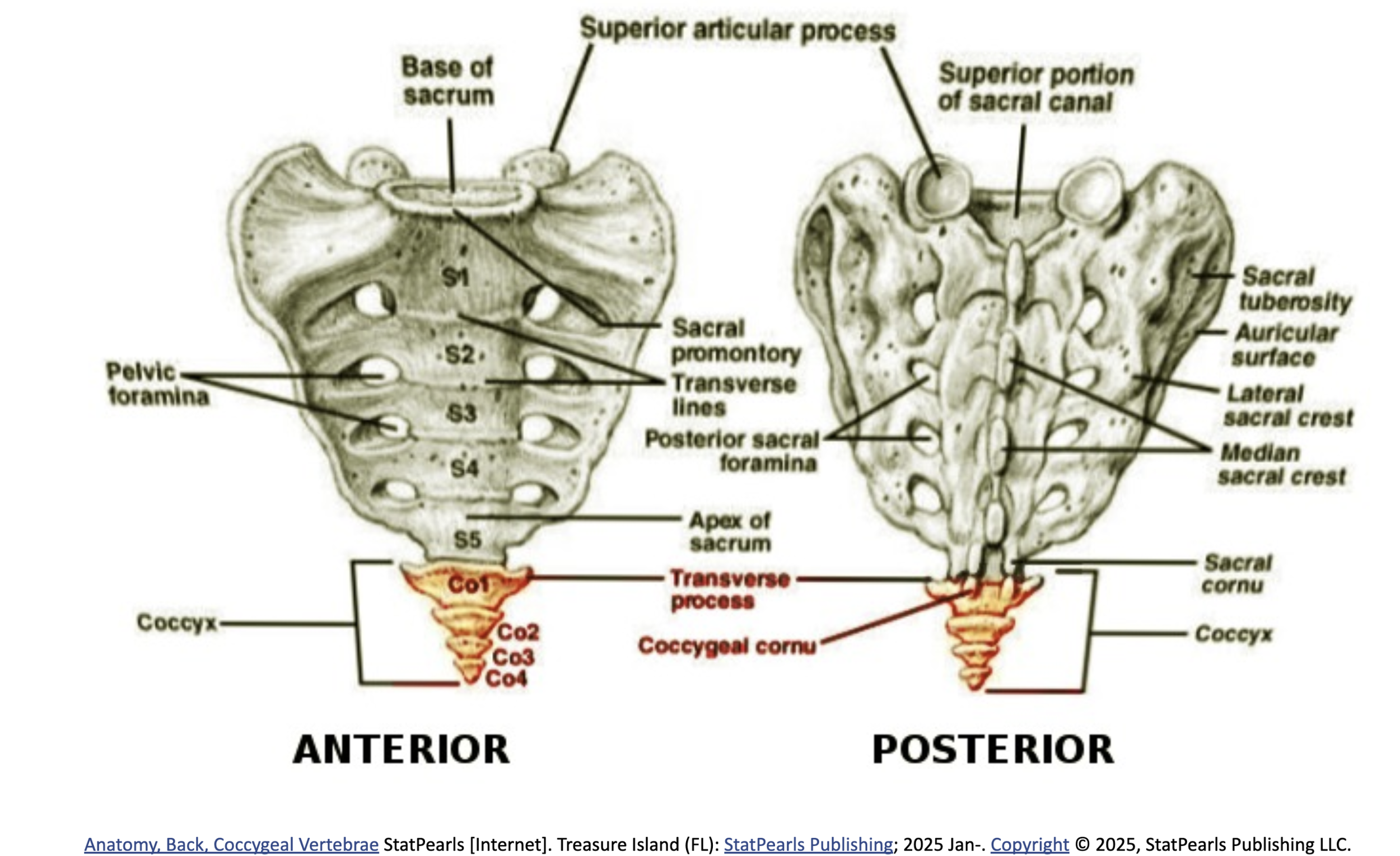
Coccydynia can be caused by a variety of issues including joint stiffness, ligament laxity, pelvic floor muscle tension, or trauma (fracture, dislocation, construction - usually due to a fall). Coccydynia often gets misdiagnosed as low back pain or sacroiliac joint issues, or may even be brushed aside by the patient or their physician. Data suggests that it occurs most often in women, although I see it in a lot of men in my clinical practice as well. It is often accompanied by pain with sitting or during bowel movements, pain with going from sitting to standing, and is associated with increased constipation.
Coccydynia is very common in the recently postpartum population, especially after a vaginal childbirth. It is common for women to give birth laying face up with their legs elevated. This position puts the coccyx in the direct path of a baby exiting through the vaginal canal. Sometimes part of the pelvic floor muscle can be torn or strained due to vaginal childbirth. 36% of women with vaginal delivery had had a diagnosis of a levator avulsion injury.[1]
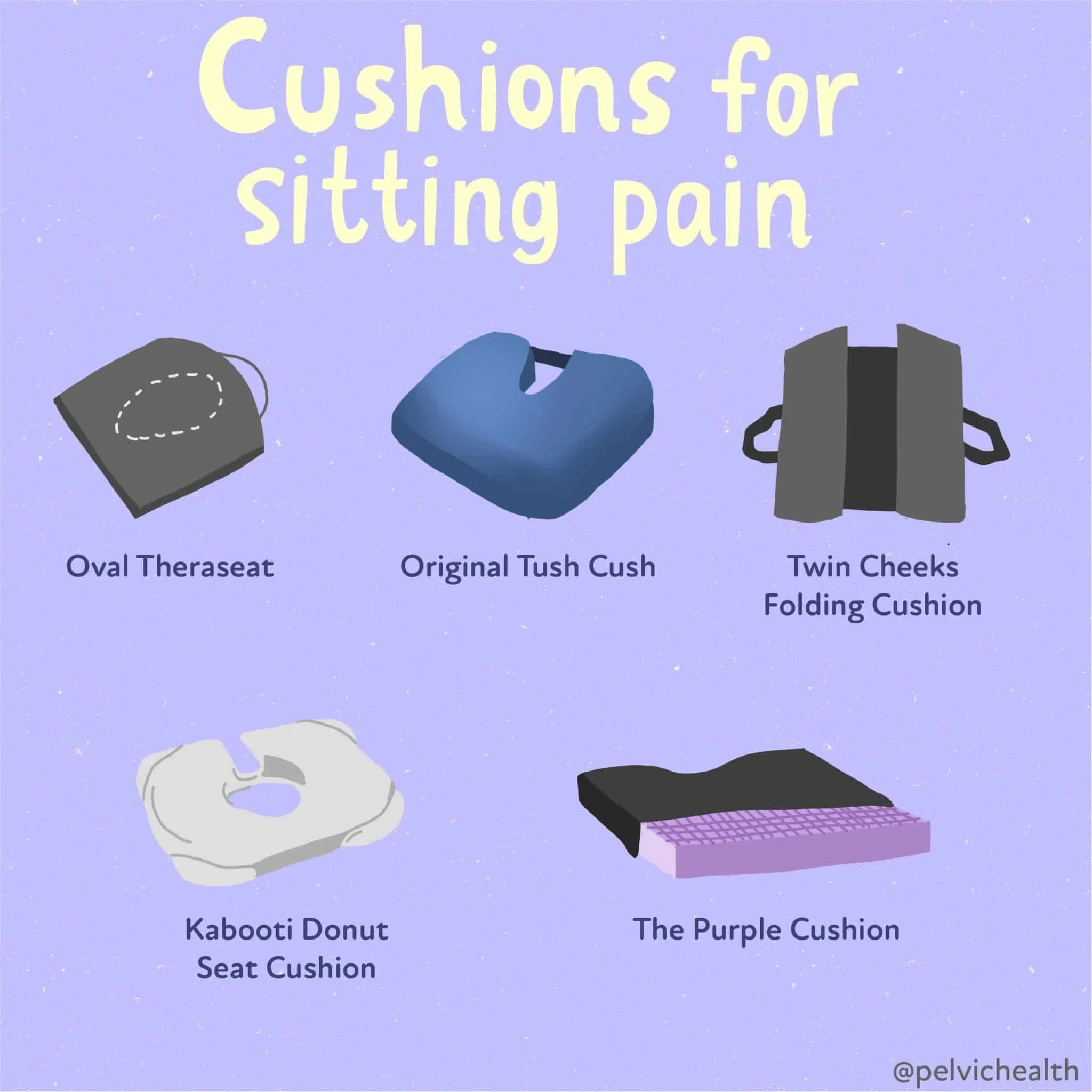
The treatments for coccydynia can include pelvic health physical therapy, using pain management strategies (TENS, NSAIDs, and mindfulness), and making changes to sitting habits (decreased time sitting, using a cushion with a cutout in the back). Many patients with coccydynia will see their symptoms improve without specific intervention, however for those who do seek treatment, the success rate is around 90%.[2]
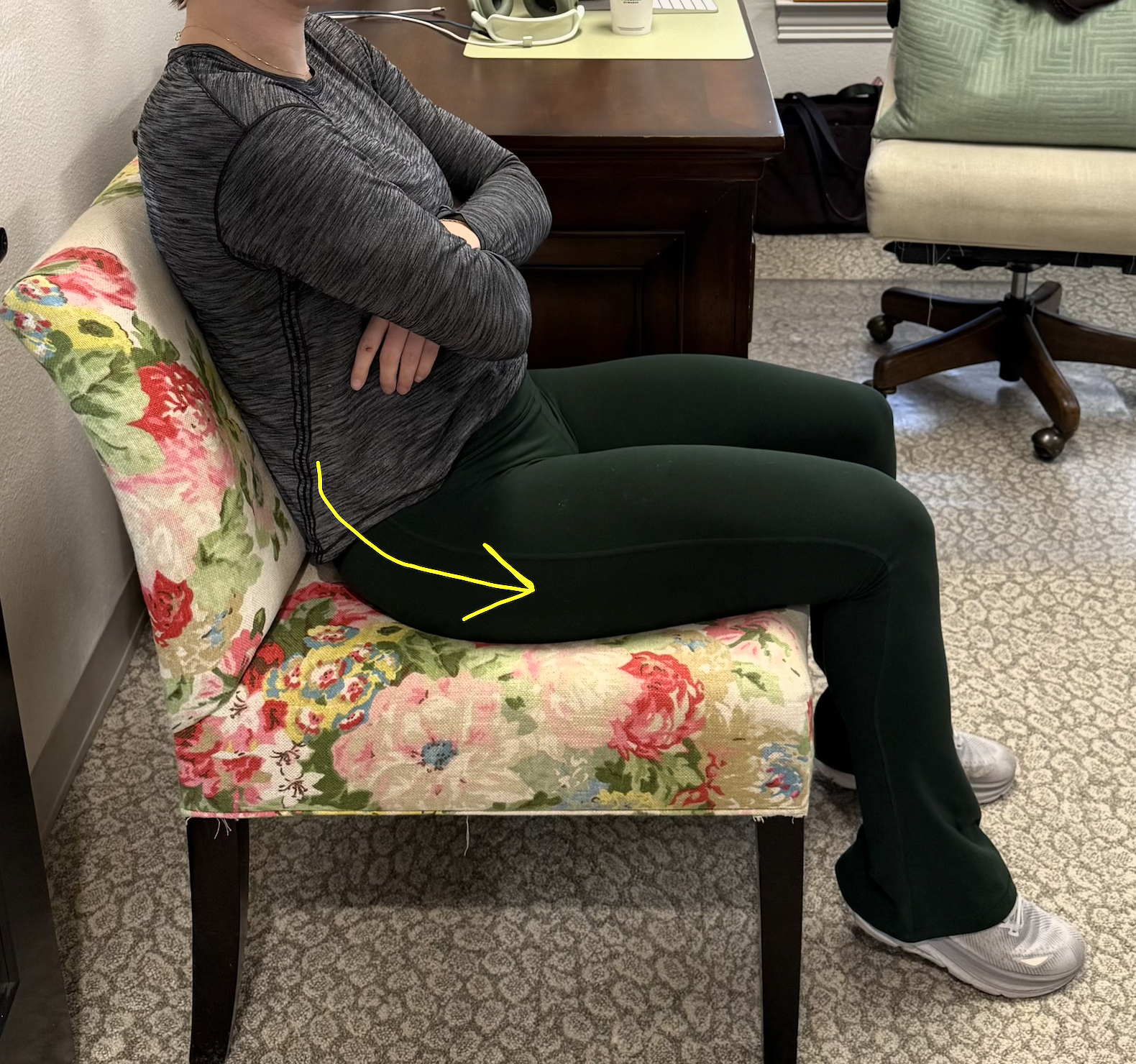
Sitting posture is one of the first things I discuss with patients who have coccydynia. *Disclaimer: I want to be clear, just because you sit with “poor posture” that is not the cause of your tailbone pain, but sitting like this may contribute to it lasting longer or cause more discomfort when sitting.* Sacral sitting is the partly reclined, backward-leaning, posture you see in the first picture below. This leads to sitting with your bottom tucked under, in this position increased pressure is placed on your sacrum and coccyx rather than being distributed through the SITs bones. Sacral sitting can also lead to rounding your upper back, which may contribute to neck and shoulder pain, and sitting with less weight distributed through the legs and feet, decreasing support further.
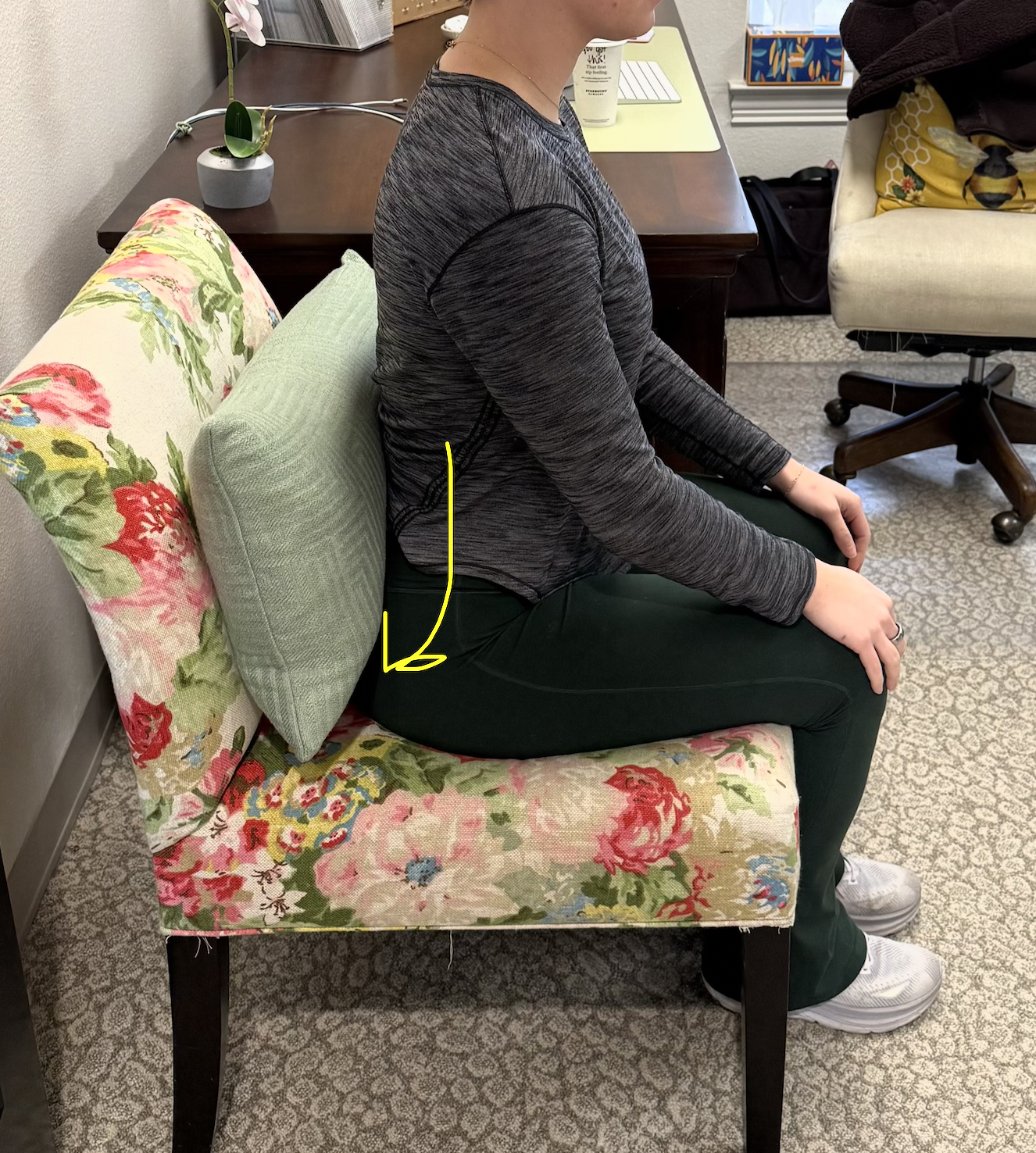
One of the simplest ways to improve sacral sitting is to increase lumbar support. By placing a pillow behind the low back and increasing lumbar support, it forces your bottom to untuck so that you are sitting more upright. This position more equally distributes weight through the SITs bones and takes strain off of the sacrum and coccyx. When you sit in this position, the tailbone is not being compressed by the pressure of your body and the chair, indicated by the yellow arrow. Another recommendation is to sit on a cushion that has a wedge-shaped cut-out at the back, which results in the coccyx hovering over the cut out, decreasing the pressure and weight-bearing on the tailbone.[2] At the end of this post, I have inserted a graphic by Pelvic Health & Rehabilitation Center showing the various types of seat cushions available.
Other physical therapy techniques such as stretching, strengthening, kinesiology (KT) taping, dry needling, using a TENS unit are also helpful in managing coccydynia symptoms. After discussing lifestyle factors like sitting posture, weight management, increasing general movement, the protocol I use when treating a patient with coccydynia is:
Modalities like TENS, Dry needling, and KT taping to reduce pain and increase the patients confidence during movement
External or internal coccyx mobilization techniques to increase mobility & decrease sensitivity of the sacrococcygeal joint & nerves
Stretching and mobility program to decrease pain and stiffness
Deep breathing w/ posterior pelvic floor expansion
Cat/ Cow and Pelvic Tilts in all positions
Lower Trunk Rotation (LTR)
Happy baby stretch
Figure 4/ Piriformis stretch
Unilateral Knee elevated rock backs
Muscle Energy Techniques (METs)
Progress to hip, core, and lumbar strengthening to increase pelvic girdle stability and take strain off the pelvic floor and coccyx
Clamshell & Reverse Clamshell
Sumo Squats
Romanian Deadlift (RDL) & Stagger-stance RDL
Hip Thrust & Single Leg Hip Thrust
Step Ups
If you are having coccydynia or any literal pain in the ass, hopefully you found this blog post helpful. If you are unsure what is cursing the pain, it may be worth it to see a pelvic health specialist for an evaluation.
Additional Resources:
Tailbone Pain Relief Now! by Dr Patrick Foye
https://pelvicpainrehab.com/blog/pain-in-your-tailbone-you-are-not-alone-michelles-success-story/
Citations:
Mostafa E, Varacallo MA. Anatomy, Back, Coccygeal Vertebrae. [Updated 2023 Jun 5]. In: StatPearls [Internet]. Treasure Island (FL): StatPearls Publishing; 2025 Jan-. Available from: https://www.ncbi.nlm.nih.gov/books/NBK549870/#
Bain HL, Mabrouk A, Foye P. Coccyx Pain. [Updated 2025 Aug 9]. In: StatPearls [Internet]. Treasure Island (FL): StatPearls Publishing; 2025 Jan-. Available from: https://www.ncbi.nlm.nih.gov/books/NBK563139/
Sidiq M, Ravichandran H, Janakiraman B, Chahal A, Rai RH, Alotaibi AH, Alotaibi AH, Alotaibi AS, Ibrahim AA, Alharbi EA, Kashoo FZ, Vats H. Effectiveness of physical therapy interventions for coccydynia: a systematic review with a narrative synthesis. Arch Physiother. 2025 Apr 25;15:77-89. doi: 10.33393/aop.2025.3233. PMID: 40308532; PMCID: PMC12042952.
